Connected Communities: Why the Future of Events is Intrinsically Human.
The events industry has seen a seismic shift in recent years. As our latest trends report observes, we’re living in an era where Forrester predicts that 74% of the workforce will be comprised of “digital native” Millennial and Generation Z workers by 2030. In this increasingly digital-first world, the art of creating genuine human connections has become harder, and more valuable, than ever before.
At asembl. we’re hard-wired to understand that human connection is the true currency of audience engagement. But here’s what’s changed – the way we build those connections critically needs to evolve. The days of brands simply talking at people are over. It’s all about the community conversation now
Why Connected Communities Matter More Than Ever.
Over the past three years, many businesses have inevitably struggled with a lack of culture and detachment from remote working. Simultaneously, brands have faced unprecedented challenges resonating with external audiences. People are switching off from sterile adverts, in favour of user-generated content that feels more genuine and trustworthy.
This is where connected communities come in. They’re the foundation of memorable, impactful event experiences that leave a lasting imprint long after the final session ends. When done right, these connections massively improve culture, buy-in and dedication.
Nurturing Event Communities Before the Doors Open.
The lifecycle of the most successful events begins weeks or months before attendees walk through the door, through strategic pre-event engagement that builds anticipation and facilitates the earliest possible connections.
How Can Creator Marketing Build Stronger Event Communities?
Some of the most successful recent campaigns have leveraged digital communities to promote content in authentic ways that humanise brands. Whether it’s TikTok creators with sub-5k followers or relatable brand ambassadors, the focus has rapidly shifted towards people-led content that feels like it’s coming from within the audience itself.
The numbers are certainly compelling:
- 94% of organisations report that creator content drives more ROI than traditional digital advertising
- 86% of marketers say creator-led marketing is effective at driving brand awareness
- Over 80% of marketers affirm influencer marketing as a highly effective strategy
For event planners and marketers, this presents a powerful opportunity. Partnering with creators or empowering attendees to become advocates enables peer-to-peer community communication to build organically around your events before, during and after the experience itself. The winning strategies enable communities to tell your brand story for you, with you serving as the facilitator rather than the narrator.
Practical Pre-Event Community Building.
Partner with micro-influencers: Smaller, engaged followings often have more genuine and highly valued connections than major influencers, sparking authentic conversation that builds real excitement and anticipation.
Create digital gathering spaces: Event-specific groups or channels give attendees a chance to connect before arriving, breaking down barriers and creating familiarity.
Enable attendee advocacy: Past attendees are your best marketers. User-generated content feels more genuine than polished corporate messaging.
Creating Connection During Your Event.
Every element of on-site experiences should be designed for enhanced connection. At asembl. we thrive on creating unforgettable experiences through personalised touches, carefully crafted moments and well-thought-out event agendas that create genuine connection between delegates or teams.
Real-world application: Autodesk at the RIBA Stirling Prize.
When we partnered with Autodesk to create a brand experience at the prestigious RIBA Stirling Prize – an event celebrating life-changing architecture – we designed an interactive art installation that served as an inspirational walkway to the main awards ceremony.
Rather than a traditional exhibition stand, we created a natural networking environment where the community of architects could enjoy hospitality while experiencing Autodesk’s technology. Projection screens showcased a looped demo of Autodesk’s ‘Forma’ software mapping the local Manchester area, providing a thought-provoking gateway for meaningful discussions.
The result was a huge buzz of important conversations that happened naturally through the shared experience, not forced networking. The event reconnected Autodesk with industry peers and underscored its position as a leader in architecture design software.
Real-world application: Adobe’s Sales Kick-Off.
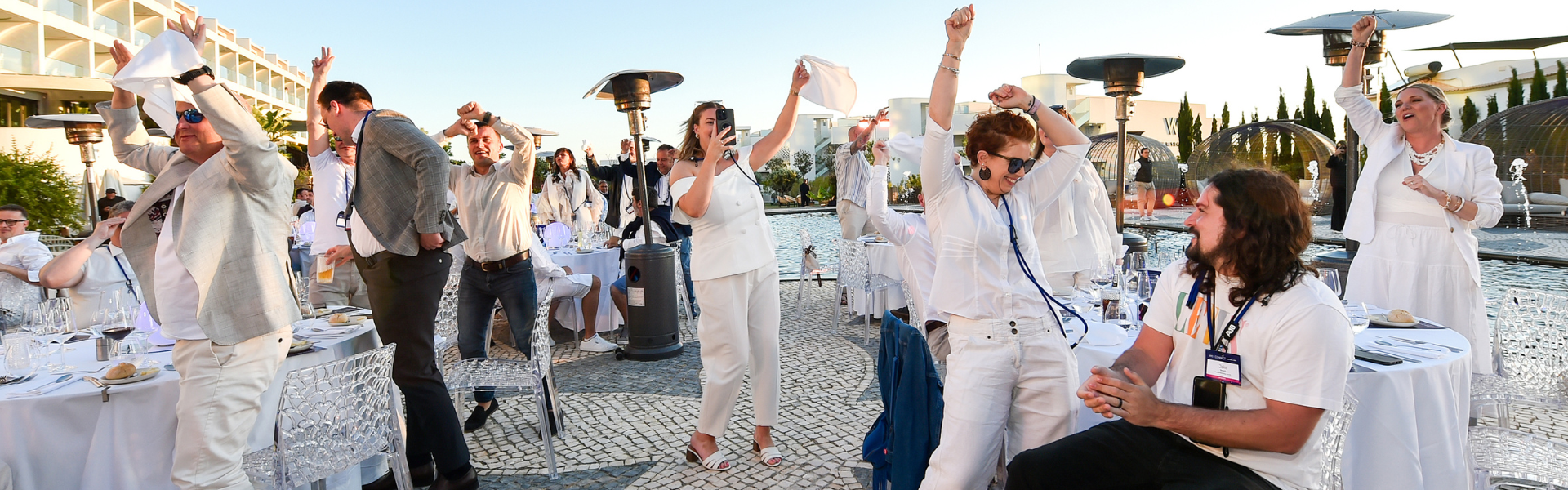
Many of Adobe Professional Services’ EMEA team members work remotely, making in-person gatherings crucial for building culture. When we managed Adobe’s sales kick-off and gala dinner, we focused on creating shared moments that would become stories their people loved to keep on telling, long after the night ended.
The exceptional dining experience, where many tried something new for the first time, became a superb conversational piece for community engagement.
Ensuring No One is Left Behind: Inclusive Event Communities.
Here’s a crucial truth: connected communities only work when everyone can participate. While 1 in 7 people in the UK are neurodivergent – and 85% have avoided events for fear of being overwhelmed – the solution is designing events that work for everyone from the start.
Since June 2025, the European Accessibility Act sets out features like Bionic Reading® as a functional requirement to ensuring digital content is equally accessible for all.
At asembl. we lead with the fundamentals of accessible event design, enabling brands to form genuine communities where everyone can connect. When events are truly inclusive, the community that forms around it is richer and more valuable for all involved.
This includes:
- Quiet spaces for those who need to recharge (wanted by 55% of neurodivergent individuals)
- Clear communication and detailed agendas in advance
- Thoughtful sensory design
- Multiple ways to participate
Beyond the Event: Building Communities That Last.
The real test of a connected community is whether relationships and sustained conversations continue to flourish afterwards.
Continue the conversation: Maintain digital spaces where attendees stay connected – LinkedIn groups, Slack channels, or regular virtual meetups.
Enable peer-to-peer connection: Give community members the tools to organise their own meetups and share resources. Your role shifts from host to facilitator.
Create ongoing value: Regular content, exclusive insights, or early access to future events gives people reasons to stay engaged.
Gather and act on feedback: Show your community their input matters by demonstrating how you’re using it to improve.
The Long-Term Partnership Approach.
Building lasting communities means building lasting partnerships. We’ve worked with Adobe for many years and as their EMEA Head of Services Marketing noted, “The team is always a pleasure to work with and continues to drive significant value as an extension of the Adobe marketing team, consistently bringing innovative thinking.”
This partnership approach highlights something crucially important – the strongest event communities are built by teams who understand they aren’t just delivering an event; they’re nurturing an ongoing relationship.
The Business Case for Connected Communities.
Connected communities lead to:
-
- Higher retention: People return to events where they’ve formed meaningful connections
- Organic growth: Community members become natural advocates
- Greater engagement: Attendees participate more actively
- Stronger loyalty: Communities create emotional connections
- Valuable feedback: Engaged communities provide honest insights
At asembl. we’ve delivered hundreds of projects across 35 countries, from 450-person executive gatherings to global conferences with over 3,000 attendees. We’ve learned that events people remember, champion and return to, are those that create that genuine and sustained connection we all seek.
From Broadcasting to Facilitating.
The most important shift in building connected communities is moving from a broadcasting mindset to a facilitating one. You’re not there to talk at your audience, you’re there to create the conditions for meaningful connections to form.
This means empowering attendees to share their knowledge, creating platforms for direct connection, and listening more than you speak.
Connected Communities Aren’t Built by Accident.
Creating events that truly connect with audiences requires intentional, thoughtful design at every stage. At asembl. we’re actively leading with best-in-class approaches that bring people together authentically and our approach always remains the same: connection first.
From pre-event creator partnerships building anticipation and designing on-site experiences for genuine interaction, to post-event platforms keeping the conversation going, every touchpoint becomes an opportunity to deepen connections.
In the end, that’s what great events do: they create moments of genuine human connection that strengthen relationships, improve organisational culture and drive long-term loyalty. They build communities that last far beyond the event itself.
And in an increasingly digital-first world, that human connection has never been more valuable.
Ready to create events that connect? Get in touch with our team at asembl. to discuss how we can help you build authentic communities around your next event.
Not read the 2026 Trends Report yet?
We’ve delved into the event marketing trends that will create the biggest impact in 2026, backed by data and shaped by real-world application – discover the Essential Event Planning Trends for 2026.