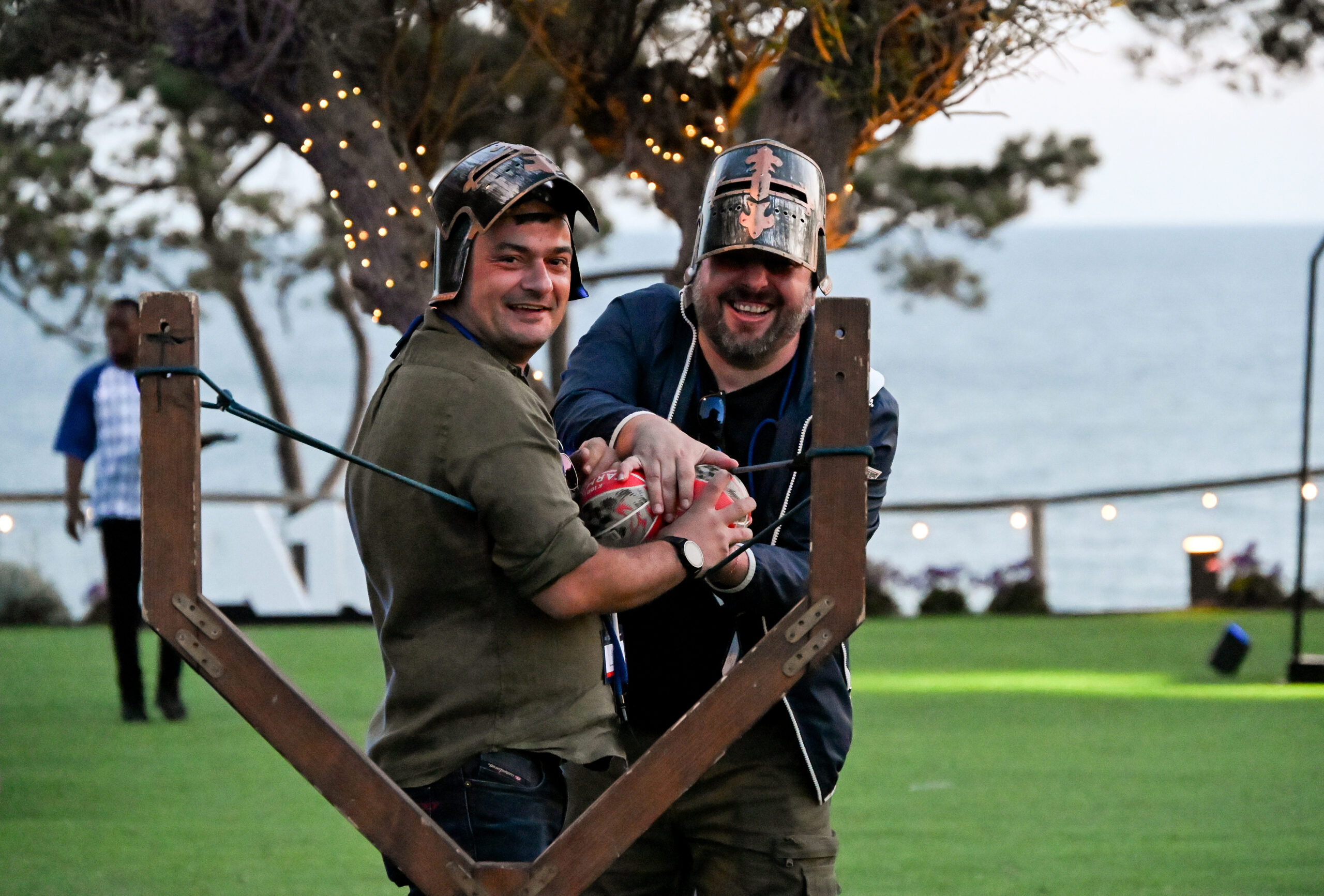
The events and broader B2B marketing landscapes have reached an inflection point. Gen Z will make up 70% of the global workforce by 2030, and what they want from brands reflects a significant shift from the generations before – namely authenticity, purpose and fun. Yes, fun! Remember fun?
While B2B events have been harnessing interactive play within live experiences for years, the businesses creating them have been slower to let that same spirit of playfulness shape their own marketing. And research shows plenty of other sectors are still catching up too.
The Humour Gap: What audiences want vs. what they’re getting.
Delving into our recent trends report, you’ll see the numbers paint quite a picture of missed opportunity. Research shows that 91% of people prefer brands to be funny, and 72% would choose a brand that uses humour over the competition. Gen Z and millennials over index even further at 94%. Yet only 33% of advertising nowadays could be seen as ‘not overly serious’.
This massive gap represents a major opportunity for brands willing to show personality and take creative risks. Connection, memorability and differentiation are all at stake here.
Why B2B marketing needs more personality.
For too long, a lot of B2B marketing has operated under a deeply flawed assumption: that “professional” means “serious.” But over the last three years, the brands breaking through are those who’ve realised that business decision-makers are still humans who appreciate creativity, wit and levity. LinkedIn recognised this, creating a playful and cleverly executed campaign tapping into a common millennial and Gen Z experience: realising your parents have no clue what you do for a living. Canva made the same bet, casting reality TV’s Gemma Collins as its fictional ‘Creative Director’ in a UK campaign that leaned hard into humour and celebrity culture, proving even a design tool can afford to not take itself too seriously.
Since 2022, we’ve seen an accelerated cultural shift in B2B marketing. The stiff, corporate tone that dominated business communications for decades is thankfully being replaced by something more human and relatable. This doesn’t mean every campaign needs to be a comedy sketch. Being positively playful means showing personality in your brand voice and taking creative risks that feel refreshing rather than formulaic or desperate. It also involves using humour to make complex topics more accessible and remembering that even in B2B, people will always buy from people they like.
The message is clear: authenticity and approachability are no longer nice-to-haves. They’re competitive necessities.
Gamification that hits the mark.
Gamification boosts engagement by as much as 150% compared to more traditional recognition methods. But there’s a crucial distinction. It only works when it’s genuinely playful, not when it’s just corporate objectives dressed up with badges and leaderboards.
Over the past three years, we’ve seen gamification evolve from simple point systems to sophisticated engagement strategies. The most effective implementations feel like natural extensions of the experience, not bolted-on mechanics. When designing events at asembl., we’ve learned that the magic happens when playful elements serve a purpose beyond mere entertainment. Interactive installations that facilitate networking naturally, challenges that encourage genuine collaboration and experiences that create shared stories people want to tell.
At a recent sales kick off for an IT client; we gamified their event app and saw a 79% app adoption rate in its inaugural year. The gamification throughout increased event engagement with behaviour tracking, networking and attendance tracking, providing event ROI analytics for key stakeholders with tasks sent to the app throughout the day.
Brand storytelling beyond the case study.
Omnichannel storytelling has found its place at the pinnacle of effective B2B marketing: 62% of B2B marketers find it effective in content marketing and 55% of customers who connect with a brand’s story are more likely to consider purchasing. Video content now accounts for 82% of all internet traffic, with 94% of B2B marketers reporting that personalised engagement boosted sales.
But the most compelling stories aren’t always the earnest case studies or polished testimonials. Sometimes, they’re the unexpected, witty and playfully irreverent pieces that make someone stop scrolling and take notice. Content that connects doesn’t need to abandon substance for style – it needs to wrap substance in something worth paying attention to.
How to be playful without losing professionalism.
Can you be playful and still be taken seriously? Absolutely. Being positively playful means embracing humanity without compromising professionalism. It means acknowledging that even in serious industries, there’s room for moments of delight, surprise and laughter.
Cast a critical eye over your marketing materials. Are they all business and no personality? Could they have been produced by any of your competitors? If so, you’re missing an opportunity. Your brand identity should be so distinctive that if you removed your logo, people would still recognise it as yours.
What positively playful looks like in practice.
Theory is one thing, but how does humour in marketing manifest when brands put it into action? A standing ovation, please, for these compelling examples.
Duolingo: The Master of Unhinged Engagement
Duolingo transformed its green owl mascot into a Gen Z icon through bold, humorous and occasionally chaotic social content. On TikTok, the brand participates in viral trends, jokes about app notifications and interacts with fans in an unapologetically weird tone. This personality-driven approach helped Duolingo reach over 10 million TikTok followers by using creator-style storytelling instead of corporate polish to transform a learning app into a cultural meme.
The takeaway? Humanising a tech brand by embracing the same authenticity and energy that define your audience’s natural communication style creates connection that traditional marketing simply can’t match.
Workday: Rock Stars in the Boardroom
Enterprise cloud software company Workday’s ‘Rock Star’ campaign scooped the Chair’s Award at The Drum Awards for B2B 2023 and was recognised as one of the top Super Bowl ads the same year. The campaign featured real-life rockers, including Gwen Stefani, Paul Stanley and Billy Idol; poking fun at “corporate types” for calling each other “rock stars.” The campaign proved that B2B brands can be witty, self-aware and entertaining without sacrificing professional credibility.
The Event Experience Opportunity
B2B Events, such as this Lapland adventure of a lifetime reward and recognition trip we delivered for a private hedge fund, offer unique opportunities to inject playfulness into your brand strategy. Unlike digital content that people scroll past in seconds, events create sustained, immersive environments where playful touches transform the entire experience.
At asembl., we’ve seen the attendee impact of thoughtful playful elements and the memorable imprint that remains long after events come to an end. Whether by delighting guests with unexpected entertainment, having interactive elements to encourage genuine participation and strengthen bonds, or creating surprising moments that become the stories still being told months afterwards. The key is meaningful intent: every playful element should serve the broader experience, creating connection, key message reinforcement, or giving people a moment of unadulterated joy.
The competitive advantage of fun.
Gen Z already accounts for a significant share of B2B buying decisions and that influence will only grow throughout 2026 and beyond. The brands experimenting with playful tones now are building an advantage that will be very difficult for late adopters to close.
“Boring B2B marketing” isn’t a safe strategy. It’s a slow fade. The brands that will thrive understand that playfulness isn’t the opposite of professionalism, but rather the evidence of confidence. It says: we know our craft well enough not to hide behind corporate formality.
The question isn’t whether your audience wants more personality. The data answers that. The question is whether you’ll be one of the brands they remember.
Creating positively playful experiences.
The opportunity is clear. The audience’s appetite is proven. The competitive advantage is real.
At asembl., we help brands find the balance between credibility and creativity, substance and surprise, professionalism and genuine human connection. Because the most memorable events and creative campaigns aren’t the most polished ones. They’re the ones that made people feel something.
Ready to design experiences that people can’t stop talking about? Get in touch with our team to discuss how we can help you create positively playful moments that deliver serious results.
Not read the asembl.trends 2026 report yet? Download it here.